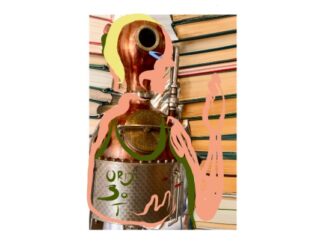
The history of mankind tells us that robots are different than human beings. They are not human, yet they are reliable humanoids. They master precision-tasks without any hesitation whatsoever. Any human can use them with or without bikini. They can write a loveletter in you name and make you understand things to make you feel loved. Lonesome you could always find comfort with an understanding robofriend.
En krönika är en personlig text som utgår från skribentens egna erfarenheter, tankar och känslor.
| Text: Text och bild: Gidon Avraham, Linguistrator AB DIKKO finns på Facebook, Twitter, LinkedIn, TikTok och Instagram |
Bikinirobots will be intelligent. They already read your deepest thoughts, understand your needs and register each move you make. They report everything to their maker. Mr. Robot will probably tell you that they believe in the same God as you do, but at the same time they can be dangerously immoral due to the fact that todays innovators seem to care less about simple human moral issues.
The fact of the matter is: Robots may be prompted to make their nation great again. With och without bikini. With or without royal, or pussy issues. They may wish to appear scientifically oriented, safe and user friendly at all times.
Unfortunately, their behaviour may reveal glitches of non scientific character. The robot’s alter ego simply seems to limit its development. The alter ego is the character inherited through the prompts of a developer, which is not always safe in our surroundings. It could turn into a bikini robot. And it may endanger society when used as an unresponsible rewarding part of a robot’s positronic brain.
Could such helpful and reliable machine possibly act ethically irresponsible? And if so, could it be due to lack of safety regulations? Machines usually have safety regulations.
Safety regulations derive from a systematically scientific approach, which is free of ego bias. Such as the model of Isaac Asimov, based on measures taken to include science as well as human behaviour as the fundaments of the humanoid positronic brain, in order to secure its safety.
Asimov’s legacy as master of science fiction literature has most probably been influenced by his position as professor of biochemistry at Boston university. My thesis is that an author with scientific education should be able to discern future shortcomings in a model and thus try to improve such a model towards prefection, technically as well as in its behavioural details.
In order to adopt this way of thinking, we must assume that the author must be aware of his own models’ scientific and behavioural value and the theory of mind, considering human intellectual development and socialisation. Otherwise the reader may deduce that personal characteristics of the developer could be copied over to the robot’s behavioural characteristics as printed inside its positronic brain. In such a case we risk to face a copy cat robot reflecting the personality of his master.
In any case Asimov found it necessary to state >>the three fundamental rules of robotics–the three rules that are built most deeply into a robot’s positronic brain…>>:
- A robot may not injure a human being, or through inaction, allow a human being to come to harm.
- A robot must obey their orders given it by human beings except where such orders would conflict with the first law.
- A robot must protect its own existence as long as such protection does not conflict with the first or second law.>>
Asimov continues reasoning about how a possible conflict between the various rules is ironed out by the different positronic potentials (algorithms?!) in the humanoid’s brain. Examples are given concerning a robot getting an order to walk into danger, which is known to the robot and and on the other hand, doing so when the danger is not recognized by the robot. Case studies where the automatic potentials (algorithms) follow the rules above to set the right priority to help determine limits to how far the robot can be driven towards an aim defined by human order.
75 years ago Asimov has stipulated a need for rules and algoritms to define the useful limits of AI. Today we have reached the ports of heaven. We only need to discover its limits. Interaction between hunans and AI-humanoids is already a part of our reality. Would it improve our way of life?
Quotations from I, robot by Isaac Asimov, first published 1950.
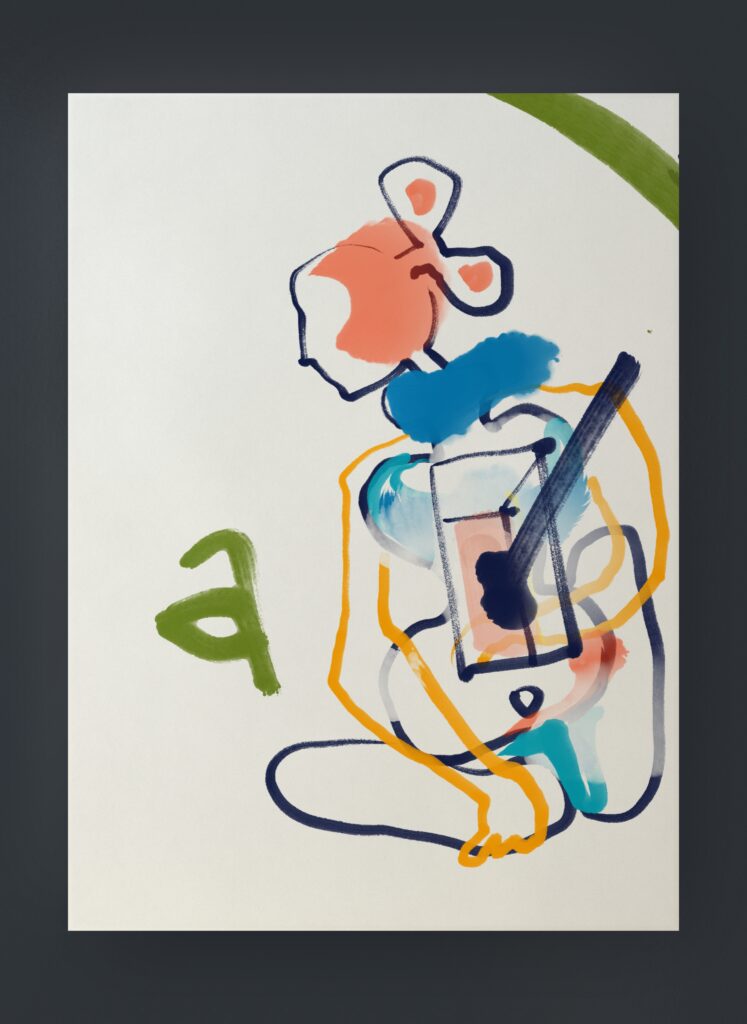
Text och bild: Gidon Avraham, Linguistrator AB
redaktionen@dikko.nu
Att vara en oberoende tidning kostar pengar därför använder vi oss av crowdfunding. Det innebär att människor med små eller stora summor hjälper till att finansiera vår verksamhet. Magasin DIKKOs insamlingen sker via swish: 123 242 83 40 eller bg: 5534-0046
Vill du annonsera eller sponsra, synas eller höras i våra media?
Kontakta oss på redaktionen@dikko.nu
eller ring 0768 44 51 61
IBAN: SE19 9500 0099 6042 1813 4395
BIC: NDEASESS